




Launched in 2023, the Real World PQC (RWPQC) Workshop is an essential platform for bringing together industry leaders, academic researchers, and standardization bodies to address the challenges and opportunities in integrating post-quantum cryptographic algorithms into today's networks and systems. This year, the workshop will take place on March 7th–8th, 2026, at the Biomedical Translation Research Center, National Biotechnology Research Park (NBRP) in Taipei City, Taiwan
Happening alongside the prestigious Real World Crypto annual conference, the RWPQC Workshop promises an exciting program featuring cutting-edge advancements, expert insights, and discussions that shape the future of post-quantum cryptography. Don't miss this unique opportunity to connect with global experts and explore the forefront of post-quantum innovation.
Prof. Ching-Ray Chang received the B. S. degree in Physics from National Taiwan University, Taipei, Taiwan, in 1979, then Ph.D. degree in Physics from University of California, San Diego, in 1988. He was director of NTU-IBM quantum computer hub and the Chair of quantum computer promotion office, MOST. Prof. Chang also Founded the Taiwan Association of Quantum Computer and Information Technologies and he is the President. Recently he published a popular science book [Tiny quantum, Giant revolution] and gave more than hundred popular talks in quantum technology.
Dustin Moody is a supervisory mathematician at the Computer Security Division, National Institute of Standards and Technology (NIST), and he leads the post-quantum cryptography project at NIST, Gaithersburg, MD 20877 USA. His research interests include elliptic curves and their applications in cryptography. Moody received a Ph.D. from the University of Washington.
Jihoon Cho is a Vice President at Samsung SDS, and his recent work includes the design and implementation of PQC, as well as cryptographic discovery and crypto-agility, contributing to the Migration to PQC project in collaboration with NIST. He earned his MMath from the University of Waterloo and holds both an MSc and a PhD in Information Security from Royal Holloway, University of London.
Thomas Pöppelmann is a Software Engineering Manager at Google in Munich working on cryptographic libraries within Google's Information Security Engineering (ISE) organization. Prior to his work at Google, he was a Senior Principal Engineer Security Architect at Infineon Technologies AG. His research interests are security architecture from the edge to the cloud, post-quantum cryptography, practical lattice-based cryptography, and physical protection of cryptographic implementations.
Rolfe Schmidt is a Research Engineer at Signal, where he translates ideas from academic research into deployable practice. His work at Signal spans the post-quantum cryptography migration -- including the design and analysis of the PQXDH and SPQR protocols, TEE-engineering -- where he helped develop Signal's Contact Discovery and Secure Value Recovery services, and more general cryptographic engineering.
Johannes Mittmann studied mathematics at the Technical University of Munich and received his Ph.D. from the University of Bonn. He joined Germany's Federal Office for Information Security (BSI) in 2013 and is working in the division “Principles of cryptographic mechanisms”. His interests include random number generation and mathematical methods in side-channel analysis. He is also a co-editor of the BSI Technical Guideline TR-02102 “Cryptographic mechanisms: Recommendations and key lengths”.
Stavros Kousidis studied mathematics and received his Ph.D. from the University of Cologne. He joined Germany's Federal Office for Information Security (BSI) in 2012 and is working in the division “Quantum-safe Cryptography and Cryptographic Applications”. He focuses on post-quantum cryptography, migration aspects and standardization.
Jintai Ding is one of the designers of the quantum resistant key establishment standard by the US National Institute of Standards and Technology (NIST), ML-KEM (FIPS 203), formerly Kyber. He is the inventor and patent owner of the first quantum key exchange which was one of the two patents licensed to NIST for ML-KEM. He is Dean of the School of Mathematics and Physics at Xi’an Jiaotong Liverpool University and a Charles Phelps Taft Distinguished Professor Emeritus at the University of Cincinnati. He and his colleagues developed Rainbow signature, a third round candidate and finalist in the NIST post-quantum standardization process. He and his colleagues completely broke a NIST second round post-quantum signature candidate LUOV and a third round candidate GeMSS (HFEv-), for which they won the best paper honorable mention award for Crypto 2021. In March 2025, his group broke the world record by solving the Darmstadt lattice SVP 200 challenge and again the SVP 210 in February 2026.
Sarah McCarthy, a leading expert in quantum-safe cryptography with a PhD from Queen’s University Belfast and an affiliate of the Institute for Quantum Computing at the University of Waterloo, champions Citi's Quantum Readiness Program. Her work, spanning from developing quantum-safe network solutions to frequent global speaking engagements, focuses on securing financial systems against quantum threats.
Shay Gueron, a professor at the University of Haifa and a Distinguished Engineer at Meta, specializes in applied cryptography and post-quantum cryptography. He previously held senior roles at Intel and AWS, contributing to cryptographic optimizations and processor instructions like AES-NI. A contributor to international standards, he holds a Ph.D. in Applied Mathematics from Technion.
Matthew, Sr. Principal Engineer at AWS, leads cryptographic solution design and analysis. He chairs ETSI TC CYBER’s Quantum Safe Cryptography group and is a member of ETSI SAGE. Formerly, he worked at Certicom/BlackBerry on elliptic curve cryptography and at the NSA as a cryptologic mathematician. He holds a Ph.D. in Mathematics from Wesleyan and a B.A. from Fordham.
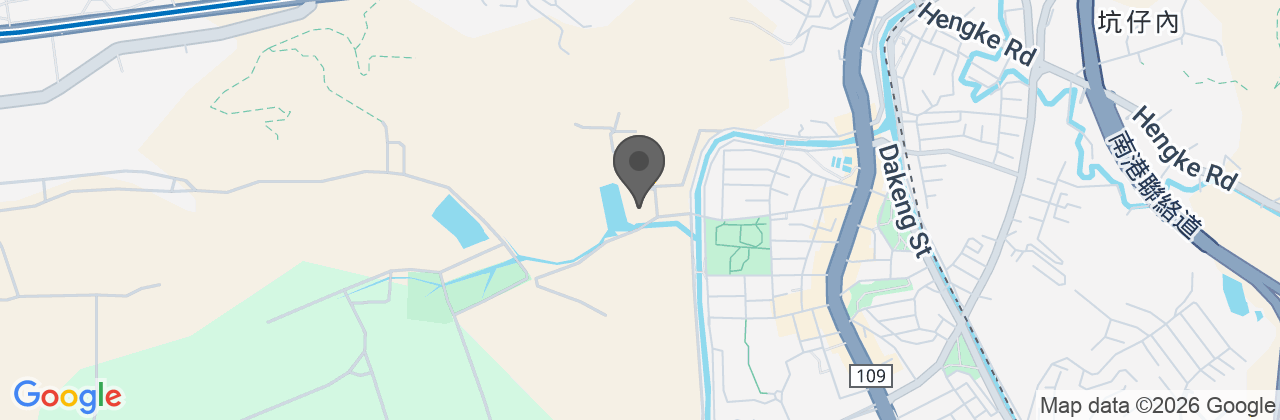
The Biomedical Translation Research Center (BioTReC) is a key part of Taiwan's National Biotechnology Research Park (NBRP), established by Academia Sinica in 2019 to bridge basic research and biotech commercialization, offering advanced facilities, mentorship, and an ecosystem for drug discovery, especially in nucleic acid drugs, precision medicine, and regenerative medicine, aiming to boost Taiwan's bio-industry.


